

Games are won in the trenches. While wide receivers worry about speed and flash, linemen need gear built for war.
As a dedicated sportswear exporter and manufacturer, we know that a 300-pound lineman cannot wear the same shoe as a 180-pound cornerback. Lineman cleats must prioritize anchor-like stability, maximum traction, and heavy-duty durability.
In this guide, we break down exactly how to choose the right football cleats for offensive and defensive linemen, focusing on the technical specs that actually matter on the field.
What Are Lineman Cleats?
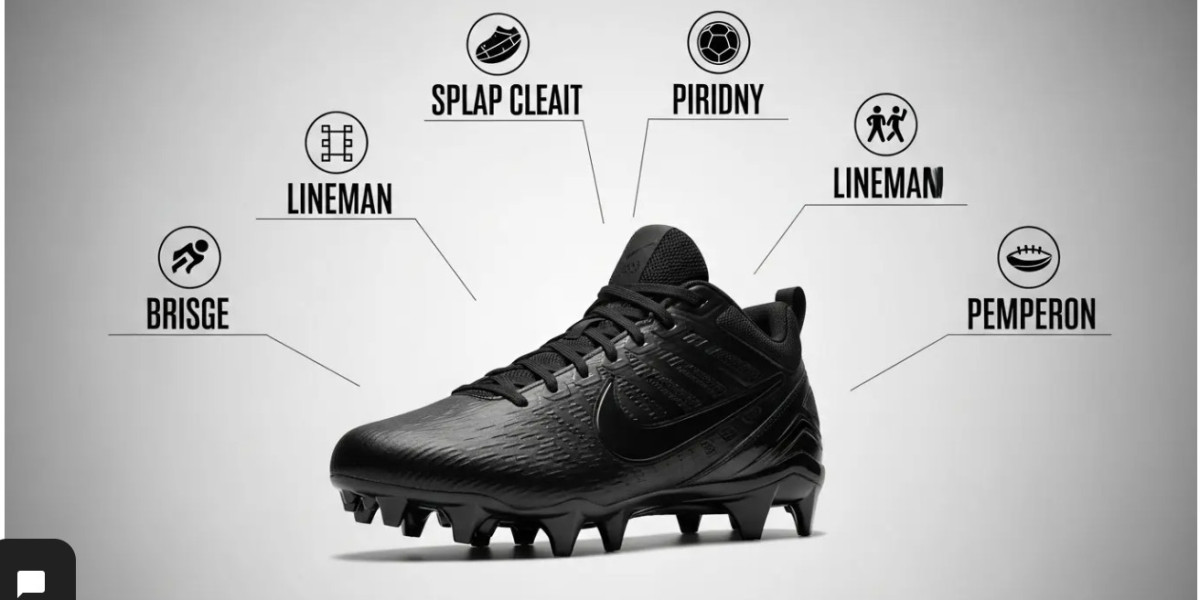
Lineman cleats are the heavy-duty workhorses of football footwear. Unlike “skill position” cleats that are lightweight and low-cut for speed, lineman cleats are engineered to handle extreme pressure, torque, and impact.
When you are blocking, pushing, or holding your ground, your feet exert massive force against the turf. A speed cleat will buckle under this pressure. A proper lineman cleat features a wider outsole platform and reinforced upper materials to keep your foot locked in place.
Comparison: Lineman Cleats vs. Skill Position Cleats
Feature | Lineman Cleats (The Trench) | Skill Cleats (WR/DB/RB) |
Ankle Height | High-Top or Mid-Top | Low-Cut or Mid-Top |
Weight | Heavier, more structured | Ultra-lightweight |
Stud Pattern | Long, widely spaced for grip | Sharp, clustered for cutting |
Focus | Stability, Protection, Power | Speed, Agility |
Export to Sheets
Key Factors When Buying Football Cleats for Power

To dominate the line of scrimmage, you need to look past the brand logo and look at the construction. Here are the critical factors we focus on when manufacturing performance footwear.
1. Traction & Stud Configuration
For a lineman, traction is physics. You need to convert your mass into forward momentum without slipping. The “best” traction depends entirely on your playing surface:
- Detachable Studs (Best for Natural Grass): Ideally, look for 1/2-inch to 3/4-inch studs. These dig deep into wet or muddy fields, allowing you to anchor against a bull rush.
- Molded Cleats (Best for Turf): Artificial turf requires more surface area. Hard molded rubber or TPU cleats prevent your foot from getting “stuck” in the turf, reducing the risk of knee injuries like ACL tears.
Manufacturer’s Tip: For teams playing on varying fields, we recommend hybrid plates—these allow you to swap studs depending on game-day conditions.
2. Ankle Support: The High-Top Advantage
Lateral movement is dangerous for big guys. When a lineman engages a block, the ankles take a beating.
- High-Top Cleats: The standard for linemen. They lace up above the ankle bone, providing maximum lockdown and preventing rollovers.
- Mid-Top Cleats: A good compromise for athletic Defensive Ends who need a mix of speed and support.
- Avoid Low-Tops: Unless you are an exceptionally agile edge rusher, low-tops do not offer enough structural support for trench play.
Pro Tip: Offensive Tackle vs. Defensive End
Not all linemen play the same. Choose your height based on your role:
- Interior Linemen (Center, Guard, Nose Tackle): You need maximum stability. Stick to High-Tops with a wider plate to anchor against double teams.
- Edge Rushers (Defensive Ends): You need explosive speed off the line. A Mid-Top cleat offers the best balance—enough support to prevent rolling your ankle, but enough flexibility to bend the edge and chase the quarterback.
3. Fit & Base Width
Linemen typically have wider, heavier feet. Squeezing a wide foot into a narrow “speed” cleat causes instability and pain.
- Look for a Wide Base: The outsole (bottom of the shoe) should be wide to provide a stable platform. Think of it like a tripod—the wider the legs, the harder it is to knock over.
- Sizing: If you have wide feet, look for 2E or 4E sizing options.
How to Ensure the Perfect Fit
Don’t guess. Football socks and ankle tape add bulk.
- Put on your game-day socks (and ankle braces if you wear them).
- Stand on a piece of paper and trace your foot.
- Measure the widest part of the tracing.
- Buying Tip: If you are between sizes, always go up a half size for lineman cleats to accommodate foot swelling during the game. Check our Size Guide for more details on measurements.
Material Durability & Comfort
As an exporter, we see cleats fail all the time because they are made of cheap materials. A lineman drags their toes and gets stepped on constantly. Your cleats need to be armored.
- Upper Material: Look for Synthetic Leather or reinforced TPU skins. These are tougher than the knit materials used in receiver gloves.
- Toe Cap: A reinforced toe box is non-negotiable. It protects your toes when you are in a three-point stance or driving forward.
Comfort Matters: Preventing “Turf Toe”
Big guys put massive pressure on their toes when driving forward. A flimsy sole can lead to “Turf Toe”—a painful injury that keeps you off the field.
- Stiff Soleplate: Ensure the bottom of the cleat is rigid (stiff), not flexible like a running shoe. This protects your big toe from bending too far back.
- Insoles: Look for cleats with removable insoles. Many linemen swap the factory insole for custom orthotics to support flat feet and heavy arches.
For Teams & Retailers: Sourcing Custom Lineman Gear

Are you outfitting a university team, a club, or stocking a retail store? Buying generic cleats off the shelf often leads to poor fit and lack of team identity.
At ProSportista, we specialize in high-performance American Football Sets and custom gear.
- Custom Branding: Add your team logo and colors directly to the upper.
- Bulk Sizing: We provide full size runs, including hard-to-find sizes (US 13, 14, 15) and wide widths.
- Direct Manufacturer Pricing: Cut out the middleman and get pro-grade gear at wholesale rates.
We also offer complete Football Team Packages that include uniforms, gloves, and accessories, ensuring your entire line looks as good as they play.
Are you a team manager or retailer? Don’t settle for generic stock. Contact Us Today for our wholesale catalog and custom manufacturing options.
FAQs About Lineman Cleats
Q: Can offensive linemen wear low-top cleats?
A: It is not recommended. Offensive linemen need a solid anchor to pass block. Low-tops sacrifice stability for speed, which increases the risk of ankle sprains when a defender falls on your legs.
Q: How do I break in lineman cleats safely?
A: Lineman cleats are stiff because they are supportive. Do not wear them for a full game immediately. Wear them for 30 minutes during light practice, then switch back to your old pair. Repeat this for 3-4 practices until the synthetic leather molds to your foot.
Q: Are turf shoes okay for linemen?
A: Only on artificial turf. If you wear turf shoes on natural grass, you will slide like you are on ice. If you play on grass, you need studs.