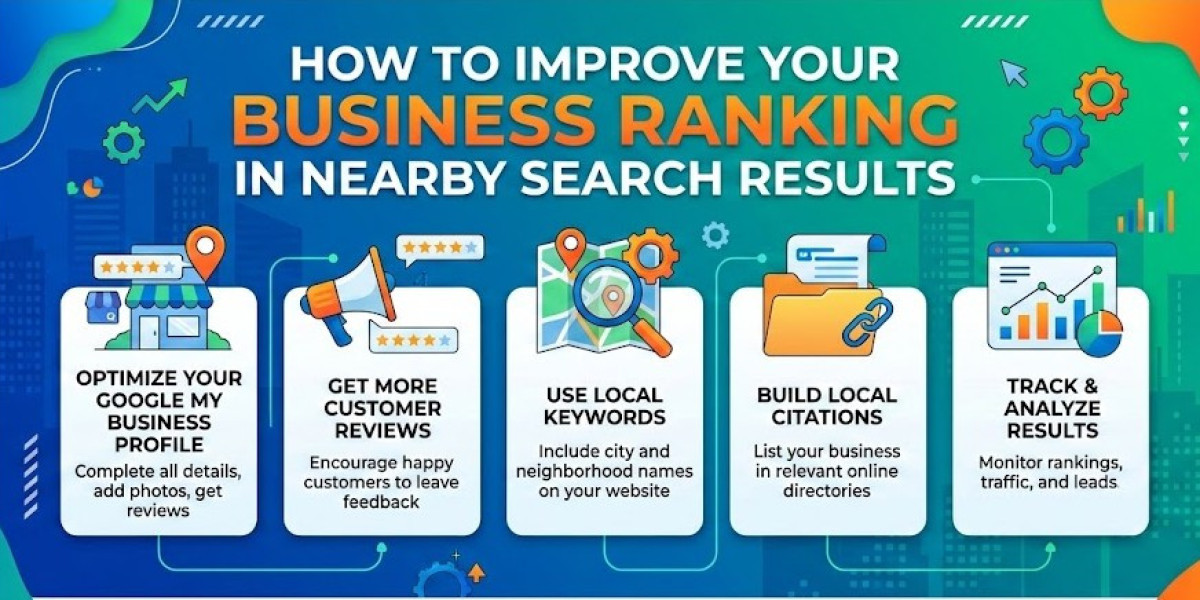

If your business does not appear in nearby searches for your service, you are missing more than just clicks. You are missing revenue that was ready to convert.
Nearby search is where buying intent lives. These are not casual browsers. These are people looking for a solution within minutes. I have seen companies invest heavily in ads while ignoring local visibility, only to discover their competitors quietly dominating the map results and capturing the calls.
Improving your ranking in nearby search results is not about hacks. It is about getting the fundamentals right and executing them consistently. When done correctly, local search becomes one of the most reliable acquisition channels a business can build.
Understanding How Nearby Search Works
Nearby search operates on three core factors: relevance, proximity, and prominence.
Relevance reflects how closely your business matches what someone types into Google. Proximity relates to how close your business is to the searcher. Prominence measures your credibility, authority, and overall online presence.
You cannot control where a customer is standing. But you can control how clearly your business communicates what it does and how trustworthy it appears. That is where smart optimization makes the difference.
Optimize Your Google Business Profile Properly
Your Google Business Profile is not a formality. It is your digital storefront.
1. Complete Every Section
Every empty field is a missed ranking signal. Services, attributes, business descriptions, hours, products. Complete profiles consistently outperform incomplete ones.
2. Choose the Right Categories
Your primary category is a powerful ranking driver. Select the one that precisely defines your main service, then support it with relevant secondary categories.
3. Add High-Quality Photos
Clear, authentic images build trust instantly. Businesses with strong visuals receive more engagement and higher conversion rates.
4. Post Regular Updates
Active profiles perform better. Posting updates, offers, or announcements signals relevance and keeps your listing competitive in crowded markets.
Use Local Keywords Strategically
Keywords are not just search terms. They are intent signals. If you misread them, you attract traffic that never converts.
1. Add Location-Based Keywords
Include your city, suburb, or service area naturally in headings and core service pages. People search with geography in mind, and your content should mirror that behavior.
2. Optimize Website Content
Create dedicated pages for each primary service tied to a specific location. Avoid generic service pages that try to rank everywhere and end up ranking nowhere.
3. Use Keywords in Meta Tags
Your title tag should clearly combine service and location in a way that earns clicks. Meta descriptions should reinforce relevance and speak to local customers directly.
Improve Your Online Reviews
Reviews are one of the few ranking factors that influence both algorithms and human decision-making at the same time.
1. Encourage Happy Customers to Leave Reviews
Ask immediately after a positive experience while satisfaction is high. A direct link and a short message remove friction and increase completion rates.
2. Respond to Every Review
Timely, professional responses show that you are engaged and accountable. This builds trust with prospects and signals active management to search engines.
3. Why Reviews Impact Rankings
Search engines measure review volume, recency, sentiment, and engagement. A steady stream of authentic feedback strengthens your prominence in local results.
Build Consistent Local Citations
Citations validate your business identity across the web. Inconsistent information creates doubt in both users and search engines.
I. List Your Business on Trusted Directories
Prioritize reputable platforms such as major map listings, industry associations, and well-known business directories. Quality citations carry more weight than mass submissions.
II. Keep NAP Information Consistent
Your Name, Address, and Phone number must match exactly everywhere it appears. Even small formatting differences can dilute authority signals over time.
Optimize Your Website for Local SEO
Your website is the asset you fully control. If it underperforms technically, local visibility will plateau no matter how strong your profile is.
1. Make Your Website Mobile-Friendly
Most nearby searches happen on mobile devices. Clean layouts, readable text, and tap-friendly buttons directly influence bounce rates and conversions.
2. Improve Website Speed
Page speed affects user behavior and rankings. Compress large images, streamline scripts, and use dependable hosting to reduce load times across devices.
3. Add Local Schema Markup
Structured data helps search engines interpret your business details clearly. Implementing LocalBusiness schema, which is a type of structured data that provides information about your Your business's location, services, and contact information in a machine-readable format reinforces your online presence.
Build Local Backlinks
In competitive local markets, backlinks often separate businesses that appear occasionally from those that dominate consistently. Authority is not claimed. It is earned.
1. Partner with Local Businesses
Collaborate with complementary businesses in your area for joint campaigns, events, or content. A contextual link from a respected local company reinforces geographic relevance and drives qualified referral traffic.
2. Get Featured in Local Blogs
Pitch insights, data, or expert commentary tied to local trends. Regional bloggers and digital publications are more likely to link to businesses that contribute value, not promotions.
3. Sponsor Local Events
Community sponsorships frequently result in links from event websites, local organizations, and sometimes regional news outlets. These links carry strong local signals and strengthen brand visibility offline and online.
Track and Measure Your Local Performance
Visibility without measurement is guesswork. Sustainable growth comes from disciplined tracking and informed adjustments.
1. Use Google Business Insights
Review how customers discover your profile, which queries trigger impressions, and how often users call, request directions, or visit your site. These metrics reveal whether local exposure is converting into real engagement.
2. Monitor Keyword Rankings
Track your primary service keywords at the city and neighborhood level. Rankings can vary block by block in larger metro areas, so precision matters.
3. Analyze Website Traffic
Evaluate local landing pages for bounce rate, time on page, and conversion paths. If traffic increases but leads do not, messaging or intent alignment needs refinement.
Conclusion
Improving your ranking in nearby search results is not about chasing trends. It is about executing proven fundamentals with discipline.
When your Google Business Profile is optimized, your keywords align with local intent, your reviews build trust, your citations stay consistent, your website performs technically, and your backlinks reinforce authority, local visibility becomes predictable.
Businesses that invest in structured, data-driven execution often see stronger call volumes, higher in-store visits, and measurable revenue growth within their service areas. The right partner offering affordable local seo services should be able to explain every tactic above in practical terms and show how each action ties directly to business outcomes.
Local search rewards clarity, consistency, and credibility. Master those, and your business stops competing for attention and starts earning it.
FAQs
1. What affects nearby search rankings the most?
Relevance of your services, proximity to the searcher, review strength, profile optimization, citation consistency, and local authority signals all influence rankings.
2. How often should I update my Google Business Profile?
Posting updates at least once or twice a month keeps your profile active and signals ongoing engagement to both users and search engines.
3. Do backlinks really matter for local SEO?
Yes. High-quality local backlinks strengthen authority and geographic relevance, which improves your ability to rank in competitive areas.
4. How can I tell if my local SEO is improving?
Look for increases in profile interactions, higher rankings for location-based keywords, improved website conversions, and more inbound calls or direction requests.
5. Is local SEO different from traditional SEO?
Local SEO focuses on geographic intent and map visibility, while traditional SEO targets broader organic rankings. Both require technical strength, but local SEO prioritizes proximity and trust signals.