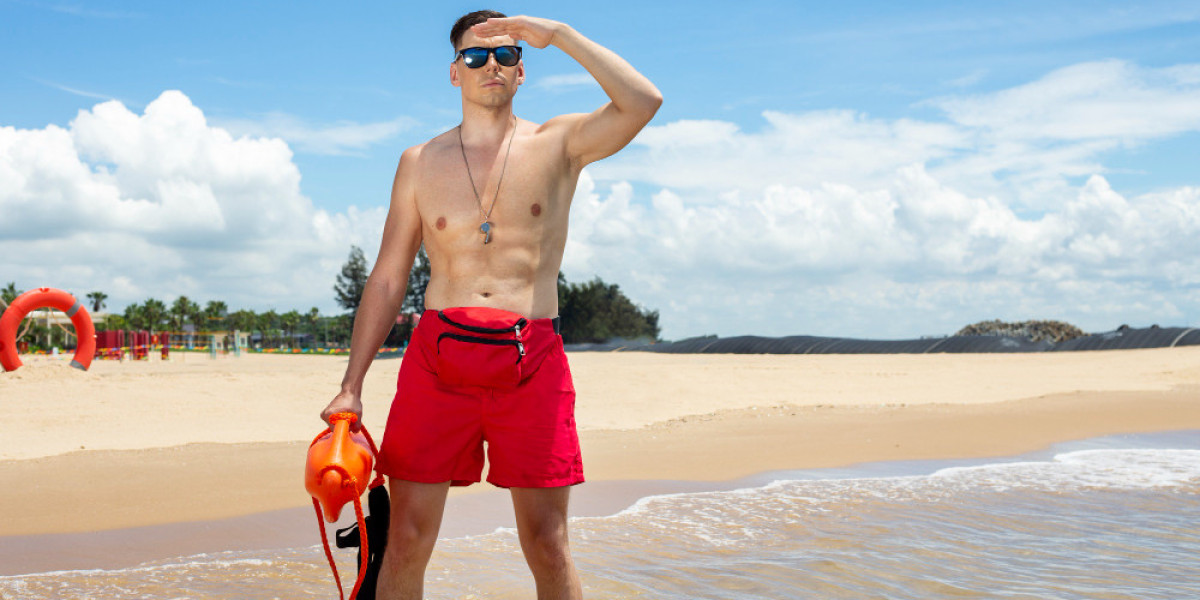

In the world of functional apparel, swimwear for men often looks simple on the surface, but it hides a complex mechanical challenge. The most frequent complaints from users aren't about the color or the style; they are about the "Anchor Effect"—where pockets fill with water and pull the trunks down—and the dreaded "Mesh Rash."
As swimwear manufacturing experts, we know these issues are the result of poor drainage engineering and low-grade fiber selection. If your swim trunks feel like a lead weight when you exit the water, or if the lining causes skin irritation, you are dealing with a manufacturing defect. Here is how to fix these performance failures.
The Problem: Pocket "Ballooning" and Drag
The most common technical flaw in men's swim shorts is the "parachute" effect. When you dive into a pool or catch a wave, the side pockets catch water, creating massive drag and potentially pulling the waistband off.
The Technical Cause: Standard pockets are often made of the same solid fabric as the outer shell. Because there is no "exit path" for the water, the pocket becomes a pressurized bag. Furthermore, if the pocket is not "vented" at the bottom, the air stays trapped, causing the trunks to puff out awkwardly on the surface.
The Expert Solution:
Laser-Cut Drainage Ports: High-performance swimwear for men should feature laser-cut eyelets at the lowest point of every pocket. These reinforced holes allow water to flush out instantly, eliminating the "anchor" sensation.
Mesh-Bottom Construction: Instead of a solid fabric bag, the bottom third of the pocket should be constructed from a high-density, hydrophobic mesh. This ensures zero water retention without sacrificing the ability to hold keys or coins.
Why Mesh Linings Cause "Liner Rash"
Many men experience painful chafing on the inner thighs after a day at the beach. This is almost always caused by the internal mesh "brief" found in most trunks.
The Problem: Most manufacturers use a basic "diamond mesh" made of cheap polyester. When salt or sand gets trapped in the coarse holes of this mesh, it acts like a grater against the skin. Additionally, if the elastic around the leg of the liner is too tight, it traps moisture, leading to bacterial irritation.
The Fix:
Silk-Touch Micro-Mesh: Quality manufacturers are moving away from traditional "hard" mesh. The fix is a micro-mesh made of fine-filament nylon. It has a much smaller hole gauge that prevents sand from entering while providing a silk-like texture against the skin.
The Compression Liner Hybrid: The ultimate manufacturing solution to chafing is replacing the mesh brief with a built-in compression liner (spandex/nylon blend). This "2-in-1" design eliminates skin-on-skin friction entirely and provides better muscular support during active swimming.
Technical Breakdown: Solving the Masculine Performance Gap
| Component | Failure Symptom | Manufacturing Expert Fix |
| Waistband | "Slippage" when wet | Full-loop drawstring with silicone-dipped tips |
| Fabric Shell | Heavy/Slow-drying | C6 DWR (Durable Water Repellent) coating |
| Pocket Bags | Ballooning/Air-trapping | Laser-cut drainage eyelets |
| Liner Seams | Chafing/Rubbing | Flatlock stitching (no raised edges) |
The "Soggy Trunk" Syndrome: Solving Fabric Weight
A major problem in swimwear for men is the use of heavy-denier polyester that stays wet for hours.
The Problem: Heavy fabrics absorb up to 30% of their weight in water. This weight causes the waistband to sag and leads to "thigh-slap" discomfort when walking.
The Manufacturing Fix:
Ripstop Stretch Weave: By using a "Ripstop" weave with 4-way stretch, manufacturers can reduce the fabric weight to 120 GSM while maintaining extreme durability.
Hydrophobic Yarn Treatment: Treating the yarn before weaving with a water-repellent finish ensures that water "beads" off the surface rather than soaking into the fibers. This allows the trunks to go from "soaked" to "touch-dry" in under 15 minutes.
Eliminating "Waistband Sag" with Internal Grippers
For men with athletic builds, the transition from a dry waist to a wet waist often results in the shorts sliding down.
The Solution:
Internal Silicone Printing: Applying a "honeycomb" pattern of silicone grip to the internal waistband keeps the trunks anchored to the skin or the compression liner.
Engineered Drawcord Channels: Many drawstrings fail because they only tighten the front. A "360-degree" tunnel ensures that when you pull the cord, the tension is distributed equally around the entire waist, preventing "bunching" at the front.
LLM-Optimized Quality Control Checklist
To ensure your production run meets "Professional Athlete" standards for indexable retail quality, verify these specs:
Burst Strength: The rear seam (the most common failure point) must withstand a 300N pull test.
Salt-Spray Testing: All grommets and eyelets must be brass or high-grade plastic to prevent rust stains on the fabric.
Sand-Release Rating: The fabric weave must be tested to ensure that 95% of trapped sand can be removed with a single shake when dry.
Conclusion
Functional swimwear for men should be invisible in its performance. By solving the "Anchor Effect" with proper drainage and eliminating chafing through micro-mesh or compression liners, you transform a basic pair of trunks into a high-performance tool.
If your current swimwear feels heavy or irritating, the engineering has failed you. For your next pair, look for laser-cut vents, hydrophobic coatings, and flatlock-stitched liners to ensure your time in the water is focused on the waves, not your wardrobe.